Showing posts with label Legal Studies CBSE. Show all posts

Tuesday, February 11, 2025

Types of offences

In the Indian Penal Code (IPC), offenses are categorized into several types based on their nature, severity, and punishment. Here are the different types of offenses:

Cognizable and Non-Cognizable Offenses
1. Cognizable Offenses: These are serious crimes, such as murder, rape, and robbery, where the police can arrest the accused without a warrant.
2. Non-Cognizable Offenses: These are less serious crimes, such as defamation, cheating, and public nuisance, where the police cannot arrest the accused without a warrant.

Bailable and Non-Bailable Offenses
1. Bailable Offenses: These are offenses where the accused has the right to be released on bail, such as theft, assault, and mischief.
2. Non-Bailable Offenses: These are serious crimes, such as murder, rape, and treason, where the accused does not have the right to be released on bail.

Compoundable and Non-Compoundable Offenses
1. Compoundable Offenses: These are offenses that can be settled out of court by the parties involved, such as cheating, theft, and assault.
2. Non-Compoundable Offenses: These are serious crimes, such as murder, rape, and robbery, that cannot be settled out of court.

Summarily Triable and Non-Summarily Triable Offenses
1. Summarily Triable Offenses: These are less serious crimes, such as public nuisance, mischief, and minor assault, that can be tried summarily by a magistrate.
2. Non-Summarily Triable Offenses: These are serious crimes, such as murder, rape, and robbery, that require a full trial by a sessions court.

Other Types of Offenses
1. Felony: A serious crime, such as murder, rape, or robbery, that is punishable by imprisonment or death.
2. Misdemeanor: A less serious crime, such as theft, assault, or public nuisance, that is punishable by imprisonment or fine.
3. Criminal Breach of Trust: An offense where a person entrusted with property or funds misuses or misappropriates them.
4. Cybercrime: An offense committed using computers, the internet, or other digital technologies, such as hacking, phishing, or online harassment.

Monday, February 10, 2025

Sabrimala Issue

The Sabarimala issue revolves around the controversy surrounding the entry of women of menstruating age into the Sabarimala temple in Kerala, India. The temple, dedicated to Lord Ayyappa, has traditionally barred women between the ages of 10 and 50 from entering the premises.

Historical Background

The restriction on women's entry was based on the belief that Lord Ayyappa was a celibate deity, and the presence of women of menstruating age would disrupt the temple's spiritual atmosphere. This tradition was challenged in court, leading to a landmark judgment in 2018.

Supreme Court Judgment (2018)

The Supreme Court of India ruled that the prohibition on women's entry into the Sabarimala temple was unconstitutional, citing the principles of equality and non-discrimination [4]. The court stated that the restriction was not essential to the practice of the Hindu religion and that women should be allowed to enter the temple.

Protests and Controversy

The judgment sparked widespread protests and controversy in Kerala, with many devotees and Hindu organizations opposing the court's decision. The protests turned violent, with clashes between police and protesters, resulting in injuries and arrests.

Latest Updates

In 2020, the Supreme Court referred the Sabarimala case to a larger bench, citing the need for a more nuanced examination of the issue. The larger bench is yet to deliver its verdict.

In the meantime, the Kerala government has implemented measures to ensure the safe entry of women into the temple, including providing security and facilities for women devotees.

The Sabarimala issue remains a contentious topic in India, with ongoing debates about gender equality, religious freedom, and the role of the judiciary in shaping social norms.

References:
[4] Supreme Court of India judgment in Indian Young Lawyers Association vs. The State of Kerala (2018)
[5] Supreme Court of India order referring the Sabarimala case to a larger bench (2020)

Sunday, February 9, 2025

Special Leave Petition (SLP)

A Special Leave Petition (SLP) is a petition filed in the Supreme Court of India, seeking special leave to appeal against a judgment or order of a lower court. It is a discretionary remedy, which means that the Supreme Court has the power to grant or refuse leave to appeal.

Here are some key aspects of a Special Leave Petition:

Grounds for Filing an SLP
Error of law_: The lower court's judgment is based on an incorrect interpretation of the law.
Error of fact_: The lower court's judgment is based on incorrect or incomplete facts.
Miscarriage of justice_: The lower court's judgment has resulted in a miscarriage of justice.

Procedure for Filing an SLP
1. Filing the petition_: The petitioner files the SLP in the Supreme Court, stating the grounds on which they are seeking special leave to appeal.
2. Listing before the court_: The SLP is listed before a bench of the Supreme Court, usually consisting of two or three judges.
3. Hearing_: The court hears the arguments of the petitioner and the respondent, and may also consider written submissions.
4. Granting or refusing leave_: The court may grant or refuse special leave to appeal, depending on the merits of the case.

Types of SLPs
1. Civil SLP_: Filed against a judgment or order in a civil case.
2. Criminal SLP_: Filed against a judgment or order in a criminal case.
3. Constitutional SLP_: Filed against a judgment or order that raises constitutional issues.
Important Aspects of an SLP
1. Discretionary remedy_: The Supreme Court has the discretion to grant or refuse special leave to appeal.
2. Limited scope_: The Supreme Court will only consider the specific grounds mentioned in the SLP.
3. Time limit_: There is a time limit for filing an SLP, which is usually 90 days from the date of the judgment or order.

Wednesday, February 5, 2025

Alternative Dispute Resolution (ADR) mechanisms in India

Alternative Dispute Resolution (ADR) mechanisms in India provide an alternative to traditional litigation for resolving disputes. Here are the main types of ADR in India, along with their subtypes:

1. Arbitration
Arbitration involves a neutral third-party arbitrator who hears the dispute and makes a binding decision.

*Subtypes:*
- *Ad hoc Arbitration*: Arbitration without institutional support.
- *Institutional Arbitration*: Arbitration conducted through institutions like the Indian Council of Arbitration.
- *International Commercial Arbitration*: Arbitration for international commercial disputes.

2. Conciliation
Conciliation involves a neutral third-party conciliator who helps parties negotiate a settlement.

*Subtypes:*
- *Med-Arb*: A combination of mediation and arbitration.
- *Conciliation Boards*: Established under the Industrial Disputes Act, 1947.

3. Mediation
Mediation involves a neutral third-party mediator who facilitates negotiations between parties.

*Subtypes:*
- *Court-Annexed Mediation*: Mediation conducted through courts.
- *Private Mediation*: Mediation conducted outside of courts.
- *Community Mediation*: Mediation conducted through community-based organizations.

4. Lok Adalat
Lok Adalat (People's Court) is a non-formal, non-judicial dispute resolution mechanism.

*Subtypes:*
- *Permanent Lok Adalat*: Established under the Legal Services Authorities Act, 1987.
- *National Lok Adalat*: Conducted by the National Legal Services Authority.

5. Negotiation
Negotiation involves direct communication between parties to reach a mutually acceptable agreement.

*Subtypes:*
- *Direct Negotiation*: Face-to-face negotiation between parties.
- *Indirect Negotiation*: Negotiation through intermediaries.

6. Med-Arb
Med-Arb combines mediation and arbitration, where the mediator also acts as the arbitrator if mediation fails.

7. Ombudsman
Ombudsman is an independent, impartial authority that investigates and resolves complaints.

8. Tribunal
Tribunal is a quasi-judicial body that hears and decides disputes in specific areas, such as labor or tax law.

These ADR mechanisms provide parties with alternatives to traditional litigation, promoting faster, more cost-effective, and less adversarial dispute resolution.

ADRs alternative disputes resolution in India


1. Arbitration
Arbitration involves a neutral third-party arbitrator who hears the dispute and makes a binding decision.

_Subtypes:_
- _Ad hoc Arbitration_: Arbitration without institutional support.
- _Institutional Arbitration_: Arbitration conducted through institutions like the Indian Council of Arbitration.
- _International Commercial Arbitration_: Arbitration for international commercial disputes.
- _Domestic Arbitration_: Arbitration for domestic disputes.
- _Fast Track Arbitration_: Expedited arbitration process for urgent disputes.
- _Online Arbitration_: Arbitration conducted through digital platforms.

2. Conciliation
Conciliation involves a neutral third-party conciliator who helps parties negotiate a settlement.

_Subtypes:_
- _Med-Arb_: A combination of mediation and arbitration.
- _Conciliation Boards_: Established under the Industrial Disputes Act, 1947.
- _Court-Annexed Conciliation_: Conciliation conducted through courts.
- _Private Conciliation_: Conciliation conducted outside of courts.
- _Community Conciliation_: Conciliation conducted through community-based organizations.

3. Mediation
Mediation involves a neutral third-party mediator who facilitates negotiations between parties.

_Subtypes:_
- _Court-Annexed Mediation_: Mediation conducted through courts.
- _Private Mediation_: Mediation conducted outside of courts.
- _Community Mediation_: Mediation conducted through community-based organizations.
- _Online Mediation_: Mediation conducted through digital platforms.
- _Transformative Mediation_: Focuses on transforming relationships and communication.
- _Facilitative Mediation_: Focuses on facilitating negotiations and reaching agreements.

4. Lok Adalat
Lok Adalat (People's Court) is a non-formal, non-judicial dispute resolution mechanism.

_Subtypes:_
- _Permanent Lok Adalat_: Established under the Legal Services Authorities Act, 1987.
- _National Lok Adalat_: Conducted by the National Legal Services Authority.
- _State Lok Adalat_: Conducted by state legal services authorities.
- _District Lok Adalat_: Conducted by district legal services authorities.

5. Negotiation
Negotiation involves direct communication between parties to reach a mutually acceptable agreement.

_Subtypes:_
- _Direct Negotiation_: Face-to-face negotiation between parties.
- _Indirect Negotiation_: Negotiation through intermediaries.
- _Distributive Negotiation_: Focuses on dividing resources or assets.
- _Integrative Negotiation_: Focuses on finding mutually beneficial solutions.
- _Principled Negotiation_: Focuses on objective criteria and principles.

6. Med-Arb
Med-Arb combines mediation and arbitration, where the mediator also acts as the arbitrator if mediation fails.

7. Ombudsman
Ombudsman is an independent, impartial authority that investigates and resolves complaints.

_Subtypes:_
- _Lokpal_: Ombudsman for investigating corruption complaints against public officials.
- _Lokayukta_: Ombudsman for investigating corruption complaints against state government officials.

8. Tribunal
Tribunal is a quasi-judicial body that hears and decides disputes in specific areas.

_Subtypes:_
- _Administrative Tribunal_: Hears disputes related to administrative matters.
- _Labor Tribunal_: Hears disputes related to labor laws.
- _Tax Tribunal_: Hears disputes related to tax laws.
- _Consumer Tribunal_: Hears disputes related to consumer protection.

Monday, January 27, 2025

Adversarial system and the Inquisitorial system

The **adversarial system** and the **inquisitorial system** are two distinct approaches to judicial processes, primarily differing in the roles of judges, parties, and the overall structure of legal proceedings. Here’s a detailed comparison with examples:

---

### **1. Role of the Judge**
- **Adversarial System**:
  - The judge acts as a neutral referee, ensuring that the rules of procedure and evidence are followed.
  - The judge does not actively investigate or gather evidence; instead, they rely on the parties (prosecution and defense in criminal cases, or plaintiff and defendant in civil cases) to present their cases.
  - Example: In the U.S., during a criminal trial, the judge oversees the proceedings but does not question witnesses or present evidence. The prosecution and defense are responsible for calling witnesses and presenting arguments.

- **Inquisitorial System**:
  - The judge plays an active role in investigating the case, questioning witnesses, and gathering evidence.
  - The judge is responsible for uncovering the truth and ensuring a fair outcome.
  - Example: In France, during a criminal trial, the judge may directly question witnesses, request additional evidence, and guide the proceedings to ensure all relevant facts are uncovered.

---

### **2. Role of the Parties**
- **Adversarial System**:
  - The parties control the case. They decide what evidence to present, which witnesses to call, and how to argue their positions.
  - The process is highly competitive, with each side advocating for their own interests.
  - Example: In a U.S. civil lawsuit, the plaintiff and defendant present their cases through their lawyers, and the jury or judge decides based on the evidence and arguments presented.

- **Inquisitorial System**:
  - The parties have a more limited role. The judge takes the lead in investigating and presenting evidence.
  - The process is more cooperative, with the goal of uncovering the truth rather than winning a contest.
  - Example: In Germany, in a civil case, the judge may independently gather evidence and question witnesses, reducing the reliance on the parties to present their cases.

---

### **3. Burden of Proof**
- **Adversarial System**:
  - The burden of proof lies entirely on the parties. In criminal cases, the prosecution must prove the defendant’s guilt "beyond a reasonable doubt."
  - Example: In the U.K., the prosecution must present sufficient evidence to convince the jury of the defendant’s guilt, while the defense challenges the prosecution’s case.

- **Inquisitorial System**:
  - The burden of proof is shared between the judge and the parties. The judge actively seeks evidence to establish the truth.
  - Example: In Spain, the judge investigates the case and ensures that all relevant evidence is considered, regardless of which party presents it.

---

### **4. Trial Structure**
- **Adversarial System**:
  - Trials are often oral and public, with a focus on live witness testimony and cross-examination.
  - The process is more formal and structured, with strict rules of evidence.
  - Example: In Australia, criminal trials involve oral arguments, witness testimony, and cross-examination in front of a jury.

- **Inquisitorial System**:
  - Trials may rely more on written evidence and documents, with less emphasis on oral arguments.
  - The process is less formal, and the judge may conduct investigations outside the courtroom.
  - Example: In Japan, judges often rely on written evidence and reports, and trials may involve multiple sessions where the judge gradually gathers information.

---

### **5. Outcome Determination**
- **Adversarial System**:
  - In criminal cases, a jury (in some jurisdictions) or judge determines guilt or innocence based on the evidence presented by the parties.
  - Example: In Canada, a jury decides whether the defendant is guilty based on the arguments and evidence presented by the prosecution and defense.

- **Inquisitorial System**:
  - The judge determines the outcome based on their investigation and evaluation of the evidence.
  - Example: In Italy, the judge delivers a verdict after reviewing all evidence collected during the investigation and trial.

---

### **6. Legal Systems Where Each is Used**
- **Adversarial System**:
  - Common in **common law countries** such as the United States, United Kingdom, Canada, Australia, and India.
  - Example: The O.J. Simpson trial in the U.S. is a famous example of an adversarial process, where the prosecution and defense presented competing narratives to the jury.

- **Inquisitorial System**:
  - Common in **civil law countries** such as France, Germany, Spain, and Japan.
  - Example: The trial of former French President Nicolas Sarkozy for corruption involved an inquisitorial process, where judges played an active role in investigating and evaluating the case.

---

### **Key Differences Summary**
| **Aspect** | **Adversarial System** | **Inquisitorial System** |
|--------------------------|----------------------------------------------------|--------------------------------------------------|
| **Role of Judge** | Neutral referee; does not investigate | Active investigator; seeks the truth |
| **Role of Parties** | Parties control evidence and arguments | Judge controls evidence; parties have limited role |
| **Burden of Proof** | Lies entirely on the parties | Shared between judge and parties |
| **Trial Structure** | Oral, public, with live testimony | Relies more on written evidence and documents |
| **Outcome Determination** | Jury or judge decides based on party arguments | Judge decides based on their investigation |
| **Common Jurisdictions** | Common law countries (U.S., U.K., Canada, etc.) | Civil law countries (France, Germany, etc.) |

---

### **Conclusion**
The adversarial system emphasizes party control and competition, while the inquisitorial system focuses on judicial control and truth-seeking. Each system has its strengths and weaknesses, and the choice of system often reflects the legal traditions and cultural values of a country.

Criminal vs Civil Lawsuits India

The processes of civil and criminal lawsuits differ significantly, though they share some common elements. Below is a general outline of the steps involved in each type of lawsuit, from initiation to judgment:

### **Civil Lawsuit Process**
A civil lawsuit involves disputes between individuals, organizations, or entities, typically seeking monetary compensation or specific performance rather than criminal penalties.

1. **Pre-filing Phase**:
   - **Dispute Arises**: The plaintiff (the party filing the lawsuit) and defendant (the party being sued) have a legal dispute.
   - **Demand Letter**: The plaintiff may send a demand letter to the defendant outlining the grievance and seeking resolution.

2. **Filing the Complaint**:
   - The plaintiff files a complaint with the court, stating the legal claims and the relief sought.
   - The court issues a summons to notify the defendant of the lawsuit.

3. **Service of Process**:
   - The defendant is formally served with the complaint and summons, giving them notice of the lawsuit.

4. **Response by the Defendant**:
   - The defendant files an answer, admitting or denying the allegations, and may file counterclaims or motions to dismiss.

5. **Discovery Phase**:
   - Both parties exchange information and evidence through:
     - Interrogatories (written questions)
     - Depositions (oral questioning under oath)
     - Requests for documents
     - Requests for admissions

6. **Pre-trial Motions**:
   - Either party may file motions to resolve the case or limit issues for trial (e.g., summary judgment motions).

7. **Settlement Negotiations**:
   - Many civil cases settle out of court through negotiation, mediation, or arbitration.

8. **Trial**:
   - If no settlement is reached, the case proceeds to trial.
   - Both parties present evidence, call witnesses, and make arguments.
   - A judge or jury decides the outcome.

9. **Judgment**:
   - The court issues a judgment, which may include monetary damages or specific performance.

10. **Appeal**:
    - The losing party may appeal the decision to a higher court.

---

### **Criminal Lawsuit Process**
A criminal lawsuit involves the government prosecuting an individual or entity for violating criminal laws, with potential penalties including fines, probation, or imprisonment.

1. **Investigation**:
   - Law enforcement investigates a crime and gathers evidence.

2. **Arrest and Charges**:
   - If there is sufficient evidence, the suspect is arrested and charged with a crime.
   - A prosecutor files a criminal complaint or obtains an indictment from a grand jury.

3. **Initial Appearance**:
   - The defendant appears before a judge, is informed of the charges, and is advised of their rights.
   - Bail may be set.

4. **Preliminary Hearing/Grand Jury**:
   - In some cases, a preliminary hearing or grand jury determines if there is enough evidence to proceed.

5. **Arraignment**:
   - The defendant enters a plea (guilty, not guilty, or no contest).

6. **Pre-trial Motions and Discovery**:
   - Both sides file motions (e.g., to suppress evidence).
   - The prosecution shares evidence with the defense (discovery).

7. **Plea Bargaining**:
   - Many criminal cases are resolved through plea bargains, where the defendant pleads guilty in exchange for a reduced charge or sentence.

8. **Trial**:
   - If no plea bargain is reached, the case goes to trial.
   - The prosecution must prove the defendant’s guilt "beyond a reasonable doubt."
   - A judge or jury delivers a verdict.

9. **Sentencing**:
   - If the defendant is found guilty, the judge imposes a sentence, which may include fines, probation, or imprisonment.

10. **Appeal**:
    - The defendant may appeal the conviction or sentence to a higher court.

---

### Key Differences:
- **Burden of Proof**: In civil cases, the plaintiff must prove their case by a "preponderance of the evidence." In criminal cases, the prosecution must prove guilt "beyond a reasonable doubt."
- **Parties**: Civil cases involve private parties, while criminal cases involve the government (prosecution) against the defendant.
- **Outcome**: Civil cases typically result in monetary damages or injunctions, while criminal cases can lead to fines, probation, or imprisonment.

Friday, January 24, 2025

Women's Reservation in India: A Critical Analysis


Women's Reservation in India: A Critical Analysis

*Introduction*
Women's reservation in India has been a contentious issue for decades. The recent passage of the Women's Reservation Bill marks a significant milestone in the country's efforts to promote gender equality. This analysis examines the bill's provisions, its implications, and the current state of women's representation in India.

*Background*
The Women's Reservation Bill was first introduced in 1996 but faced significant opposition. The bill aimed to reserve 33% of seats in the Lok Sabha and state legislative assemblies for women. After multiple iterations and amendments, the bill was finally passed in 2023.

*Key Provisions of the Women's Reservation Bill*
1. *Reservation of Seats*: 33% of seats in the Lok Sabha and state legislative assemblies will be reserved for women.
2. *Rotation of Seats*: Reserved seats will be rotated every five years to ensure that different areas are represented.
3. *Quota within Quota*: 50% of the reserved seats will be allocated to women from Scheduled Castes (SCs) and Scheduled Tribes (STs).

*Implications of the Bill*
1. *Increased Representation*: The bill aims to increase women's representation in politics, promoting gender equality and empowering women.
2. *Diverse Perspectives*: Women from diverse backgrounds will bring unique perspectives to the legislative process, enriching policy-making.
3. *Challenging Patriarchal Norms*: The bill challenges traditional patriarchal norms, promoting women's participation in politics and decision-making.

*Current State of Women's Representation in India*
1. *Lok Sabha*: Women's representation in the Lok Sabha has increased from 5.5% in 1991 to 14.3% in 2023.
2. *State Legislative Assemblies*: Women's representation in state legislative assemblies varies, ranging from 2.2% in Nagaland to 23.1% in West Bengal.
3. *Panchayati Raj Institutions*: Women's representation in panchayati raj institutions has increased significantly, with over 40% of seats reserved for women.

*Data on Women's Reservation*
| Year | Lok Sabha | State Legislative Assemblies | Panchayati Raj Institutions |
| --- | --- | --- | --- |
| 1991 | 5.5% | 4.4% | - |
| 2004 | 8.3% | 8.1% | 33.6% |
| 2014 | 11.2% | 9.4% | 42.7% |
| 2023 | 14.3% | 12.1% | 45.2% |

Sources:

- Election Commission of India
- Ministry of Women and Child Development
- National Commission for Women

*Conclusion*
The Women's Reservation Bill marks a significant step towards promoting gender equality in India. While challenges persist, the bill's provisions aim to increase women's representation in politics, promoting diverse perspectives and challenging patriarchal norms. As India continues to strive for greater gender equality, the success of this bill will be crucial in empowering women and promoting inclusive governance.

A Comparative Analysis of IPC, CrPC, and Evidence Act with the New Laws


Indian Legal Reforms: A Comparative Analysis of IPC, CrPC, and Evidence Act with the New Laws

*Introduction*
The Indian government has recently passed significant legal reforms, replacing the colonial-era Indian Penal Code (IPC), Code of Criminal Procedure (CrPC), and Indian Evidence Act with three new laws: the Bharatiya Nyaya Sanhita, the Bharatiya Nagarik Suraksha Sanhita, and the Bharatiya Sakshya Adhiniyam. This paper provides a comparative analysis of the old and new laws, highlighting the key changes and implications.

*Key Highlights of the New Laws*
1. *Electronic Summons*: Summons can now be delivered electronically, reducing paperwork and ensuring effective communication.
2. *Mandatory Videography*: Crime scenes must be videographed to prevent tampering with evidence.
3. *Online Registration of Police Complaints*: Police complaints can now be registered online, making the process more accessible.
4. *Zero FIR*: A zero FIR can be filed at any police station, regardless of the crime's location.
5. *Victim's Rights*: Victims will receive a complimentary copy of the FIR, ensuring their involvement in the legal proceedings.
6. *Arrest Details*: Arrest details will be displayed prominently in police stations and district headquarters.

*Comparative Analysis of IPC, CrPC, and Evidence Act with the New Laws*
*Indian Penal Code (IPC)*

1. *Definition of Offenses*: The IPC defined various offenses, including murder, theft, and assault. The new law, Bharatiya Nyaya Sanhita, retains these definitions but adds new offenses, such as cybercrime and terrorism.
2. *Punishments*: The IPC prescribed punishments for various offenses, including imprisonment and fines. The new law retains these punishments but adds new provisions, such as community service and rehabilitation programs.

*Code of Criminal Procedure (CrPC)*

1. *Investigation and Trial*: The CrPC outlined the procedures for investigation and trial, including the filing of FIRs, arrest, and bail. The new law, Bharatiya Nagarik Suraksha Sanhita, streamlines these procedures, introducing electronic summons, online registration of police complaints, and video trials.
2. *Police Powers*: The CrPC granted police powers to arrest, detain, and interrogate suspects. The new law retains these powers but adds new provisions, such as the requirement for police to videograph crime scenes and display arrest details prominently.

*Indian Evidence Act*

1. *Admissibility of Evidence*: The Indian Evidence Act outlined the rules for admissibility of evidence in court, including the hearsay rule and the rule against self-incrimination. The new law, Bharatiya Sakshya Adhiniyam, retains these rules but adds new provisions, such as the admissibility of electronic evidence and the use of forensic experts.
2. *Witness Protection*: The Indian Evidence Act provided for witness protection, including the use of pseudonyms and protection from harassment. The new law retains these provisions but adds new measures, such as witness protection programs and anonymous testimony.

*Conclusion*
The new laws, Bharatiya Nyaya Sanhita, Bharatiya Nagarik Suraksha Sanhita, and Bharatiya Sakshya Adhiniyam, mark a significant departure from the colonial-era IPC, CrPC, and Evidence Act. The reforms aim to modernize India's criminal justice system, ensuring faster and more effective delivery of justice. While there are concerns about the implementation and impact of these reforms, they represent a crucial step towards creating a more just and equitable society.

*References*
1. "Bharatiya Nyaya Sanhita: A New Era for Indian Justice" - The Hindu
2. "Understanding the New Code of Criminal Procedure" - Live Law
3. "The Indian Evidence Act: A Critical Analysis" - Journal of Indian Law Institute
4. "Reforms in Indian Criminal Justice System: A Comparative Analysis" - International Journal of Criminal Justice Sciences

Tort, tort types, examples & landmark cases.


Definition of Tort
A tort is a civil wrong that causes a claimant to suffer loss or harm, resulting in legal liability for the person who commits the tortious act. It is a breach of a duty imposed by law, which gives rise to a civil right of action for damages or other relief.

Types of Torts
*1. Intentional Torts*
These are torts that are committed intentionally, such as:

- *Assault*: Threatening to harm someone, e.g., raising a fist.
- *Battery*: Physically harming someone, e.g., punching.
- *False Imprisonment*: Restricting someone's freedom, e.g., locking someone in a room.
- *Defamation*: Making false statements that harm someone's reputation, e.g., spreading rumors.

*2. Negligent Torts*
These are torts that result from a failure to exercise reasonable care, such as:

- *Negligence*: Failing to act with reasonable care, e.g., causing a car accident.
- *Professional Negligence*: Failing to meet professional standards, e.g., a doctor's medical malpractice.

*3. Strict Liability Torts*
These are torts where liability is imposed regardless of fault, such as:

- *Product Liability*: Liability for harm caused by a defective product, e.g., a faulty toy.
- *Occupiers' Liability*: Liability for harm caused to visitors on one's property, e.g., a slippery floor.

Examples
- *Rylands v. Fletcher (1868)*: A classic example of strict liability, where a defendant's reservoir burst and flooded a neighbor's mine.
- *Donoghue v. Stevenson (1932)*: A landmark case establishing the duty of care in negligence cases, where a woman found a snail in her ginger beer.
- *Indian Railways v. Sudhakar (2004)*: An Indian case where the Supreme Court held the railways liable for injuries sustained by a passenger due to negligence.

India Jurisprudence
In India, tort law is governed by various statutes, including:

*1. The Indian Penal Code, 1860*
Deals with criminal wrongs, but some provisions have tortious implications.

*2. The Law of Torts*
A comprehensive law that covers various types of torts, including negligence, defamation, and strict liability.

*3. The Consumer Protection Act, 1986*
Provides remedies for consumers who suffer harm due to defective products or services.

*4. The Motor Vehicles Act, 1988*
Regulates liability for accidents caused by motor vehicles.

Indian courts have also developed jurisprudence on tort law through various judgments, including those mentioned above.

Landmark Cases in Indian Tort Law
- *M.C. Mehta v. Union of India (1987)*: A landmark case on environmental torts, where the Supreme Court held that the state has a duty to protect the environment.
- *Charan Lal Sahu v. Union of India (1990)*: A case on negligence, where the Supreme Court held that the state is liable for damages caused by its negligence.
- *Common Cause v. Union of India (1999)*: A case on public interest litigation, where the Supreme Court held that the state has a duty to protect the rights of citizens.

Wednesday, June 5, 2024

9 reasons for popularity of PM Modi

 Prime Minister Narendra Modi's popularity can be attributed to several factors, ranging from his leadership style to policy initiatives. Here’s an overview of why he is so popular:


1. **Strong Leadership and Charisma:** Modi is often perceived as a decisive and strong leader. His charisma and ability to connect with people across different demographics contribute significantly to his popularity.


2. **Economic Initiatives:** Modi has launched several economic reforms aimed at boosting India’s economy. Initiatives like “Make in India,” “Digital India,” and the implementation of the Goods and Services Tax (GST) have been pivotal. His emphasis on developing infrastructure, promoting entrepreneurship, and attracting foreign investment has resonated with many.


3. **Social Welfare Programs:** Modi has introduced various social welfare schemes targeting the underprivileged, such as the Pradhan Mantri Jan Dhan Yojana (financial inclusion), Pradhan Mantri Ujjwala Yojana (LPG connections to poor households), and Swachh Bharat Abhiyan (Clean India Mission). These initiatives have improved living standards and garnered widespread support.


4. **Nationalism and Security:** Modi’s government has emphasized nationalism and a strong stance on national security. Actions such as the surgical strikes in 2016 and the Balakot airstrike in 2019 have bolstered his image as a protector of national interests, appealing to patriotic sentiments.


5. **Effective Communication:** Modi’s adept use of social media and technology to communicate directly with the public has been a game-changer. His Mann Ki Baat radio program and frequent public addresses help maintain a direct line with citizens.


6. **Political Strategy:** Modi and the Bharatiya Janata Party (BJP) have demonstrated strong organizational skills and electoral strategies. Their ability to mobilize grassroots support and effectively campaign across the country has been a significant factor in electoral successes.


7. **Cultural Resonance:** Modi’s promotion of traditional Indian culture and values, coupled with his own humble beginnings and personal story of rising through the ranks, resonates with many Indians who see him as one of their own.


8. **International Recognition:** Modi’s active foreign policy and efforts to enhance India’s global standing have earned him international recognition. His engagements with world leaders and efforts to attract global investments have further enhanced his domestic popularity.


9. **Crisis Management:** Modi’s handling of crises, such as the COVID-19 pandemic, though not without criticism, has been seen by many as proactive and decisive. Initiatives like the world’s largest vaccination drive and economic relief packages have been pivotal.


These factors collectively contribute to Narendra Modi’s sustained popularity across diverse sections of Indian society, making him a prominent and influential figure in contemporary Indian politics.

Saturday, May 25, 2024

Major Laws and Rights


🔹 Motor Vehicle Act 1988, section -185, 202

➨ At the time of driving if your 100ml. blood contains more than 30mg. of alcohol then the police can arrest you without a warrant.


🔹 Criminal Procedure Code, Section 46

➨ No woman cannot be arrested before 6 A.M. and after 6 P.M.


🔹 Indian Penal Code, 166 A

➨ A Police officer can’t refuse to lodge an FIR if he/she does so they could be jailed for up to 6 months to 1 year.


🔹 Indian Sarais Act, 1887

➨ Even any 5-star hotel can’t prohibit you from drinking potable water and using its washrooms.


🔹 Motor Vehicle Act, 1988

➨ As per Section 129 of the Indian Motor Vehicle Act, wearing the helmet is a must for two-wheeler riders. Section 128 of this Motor Vehicle Act limits the maximum two riders on the bikes.


🔹 Domestic Violence Act, 2005

➨ If a young boy and a girl want to live together in a “live-in relationship”, they can do so because it is not illegal. Even the newborn from this relationship is also a legal son or daughter and this newborn have the full right in the assets of his/her father.


🔹 Police Act, 1861

➨ A police officer is always on duty whether he/she wearing a uniform or not. If a person makes a complaint to the officer, he/she could not say that he can’t help the victim because he/ she is not on duty.


🔹 Maternity Benefit Act, 1961

➨ No company can fire a pregnant woman. It may be punishable by a maximum of 3 years of imprisonment. If the company (Government or private) has more than 10 employees then the pregnant women employee is eligible to get 84 days paid maternity leave.


🔹 Income Tax Act, 1961

➨ In the case of tax violations, the tax collection officer has the power to arrest you but before arresting you, he/she will have to send a notice to you. Only Tax Commissioner decides how long you will stay in the custody.


🔹 Hindu Marriage Act, 1955 (Section -13)

➨ As per the Hindu Marriage Act, 1955 (any husband or wife) may apply for divorce in the court on the basis of Adultery (physical relationship outside of marriage), physical and mental abuse, impotency, to leave home without information, to change Hindu religion and adopt other religion, insanity, incurable disease and no information about husband or wife for seven-year.


🔹 Code of Criminal Procedure, 1973

➨ Only women police constable can arrest women.  Male constable doesn’t have the right to arrest women. Women have the right to deny going to police stations after the 6 P.M. and before the 6 A.M. In the case of a serious crime only after receipt of the written order from the magistrate, a male policeman can arrest a woman.


🔹 As per the Citizen Charter (Indian Oil Corporation website)

➨ There are very few people who know that if their gas cylinder blasts during the cooking of food then the gas agency is liable to pay Rs. 50 lakh to the victim as compensation. To claim this compensation consumers need to lodge an FIR to the nearest police station and submit it to the concerned gas agency.


🔹 Automotive (Amendment) Bill, 2016

➨ If you are fined for a crime (like riding without a helmet or any other reason) then you will not be fined for the same reason in the same day.


🔹 Maximum Retail Price Act, 2014

➨ Any Shop keeper can’t charge more than the printed price of any commodity but a consumer has the right to bargain for less than the printed price of a commodity.


🔹 Limitation Act, 1963

➨ If your office does not pay you then you have the power to file an FIR against it within 3 years. But if you report after 3 years, you will not get anything for the due.


🔹 Section 294 of the Indian Penal Code

➨ If you are found involved in “obscene activity" at a public place, you can be imprisoned for 3 months. But in the absence of an exact definition of obscene activity police have always misused this act.


🔹 Hindu Adoption and Maintenance Act, 1956

➨ If somebody belongs to the Hindu religion and has a son or grandson then he can’t adopt a second child.

Friday, May 3, 2024

The three judges cases of India

The "Three Judges Cases" in India are a series of landmark judicial decisions that significantly impacted the appointment and transfer of judges in the country. These cases played a crucial role in defining the principles of judicial independence, separation of powers, and the collegium system in India's judiciary. Here are the details of each case:

1. **S. P. Gupta v. Union of India (First Judges Case) - 1981:**
   - **Background:** The case revolved around the interpretation of Article 124 of the Indian Constitution, which deals with the appointment of Supreme Court judges. The government's power to appoint judges was challenged.
   - **Decision:** The Supreme Court held that the opinion of the Chief Justice of India (CJI) in judicial appointments should be given primacy. However, the CJI's opinion should be formed in consultation with a collegium of four senior-most judges of the Supreme Court.
   - **Significance:** This case established the collegium system, where judges have a significant say in judicial appointments.

2. **Supreme Court Advocates-on-Record Association v. Union of India (Second Judges Case) - 1993:**
   - **Background:** This case dealt with the interpretation of Article 124 and the role of the CJI in judicial appointments. The government's power to appoint judges was again challenged.
   - **Decision:** The Supreme Court ruled that the CJI should consult a collegium consisting of four senior-most judges of the Supreme Court in judicial appointments. The CJI's opinion, along with the collegium's recommendation, should be determinative.
   - **Significance:** This case reaffirmed and clarified the collegium system, emphasizing the independence of the judiciary from executive interference in appointments.

3. **Special Reference No. 1 of 1998 (Third Judges Case) - 1998:**
   - **Background:** The President of India referred questions regarding the appointment of Supreme Court judges to the Supreme Court for its opinion, leading to this case.
   - **Decision:** The Supreme Court reiterated and expanded on the collegium system. It held that the CJI's opinion, along with the collegium's recommendation, should be binding on the government in judicial appointments and transfers.
   - **Significance:** This case solidified the collegium system as the primary method for judicial appointments and transfers, further strengthening judicial independence.

These three cases collectively established the collegium system, which gives significant autonomy to the judiciary in the appointment and transfer of judges, aiming to ensure judicial independence and uphold the separation of powers between the judiciary and the executive in India.

Due process vs Procedure established by law

In India, due process and procedure established by law are two distinct legal concepts that ensure fairness and justice, but they operate differently.

1. **Due Process:**
   - **Definition:** Due process refers to the principle that the government must respect all legal rights owed to a person according to the law.
   - **Application:** It ensures that individuals have the right to a fair trial, legal representation, and protection against arbitrary or unfair government actions.
   - **Example:** In the Indian context, Article 21 of the Constitution guarantees the right to life and personal liberty. The Supreme Court of India has interpreted this to include the right to a fair trial, legal aid, and protection against arbitrary arrest or detention.

2. **Procedure Established by Law:**
   - **Definition:** This concept means that any action taken by the government must follow procedures laid down by law, regardless of whether they are fair or just.
   - **Application:** It focuses on the legality of the procedure rather than its fairness. If a law permits a certain action, it can be carried out even if it seems unfair.
   - **Example:** The controversial Prevention of Terrorism Act (POTA) in India was considered legal and enforceable because it was established by law, despite criticism that it compromised civil liberties.

In essence, due process emphasizes the protection of individual rights and ensures fairness, while procedure established by law focuses on the legality of government actions according to existing laws, even if those laws are deemed unfair or unjust by some.

Sunday, April 21, 2024

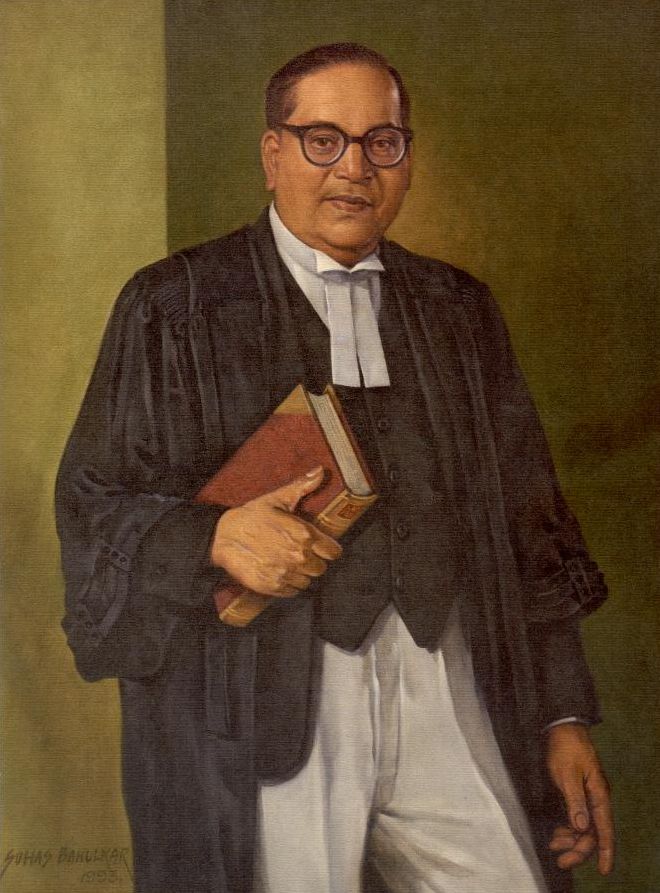
Dr. Bhimrao Ramji Ambedkar

Dr. Bhimrao Ramji Ambedkar 

Photo Credit : High Court of Bombay

Dr. Bhimrao Ramji Ambedkar (1891-1956) was born on 14 April 1891 in Mhow Cantonment, Madhya Pradesh. He completed his primary schooling in Satara, Maharashtra and completed his secondary education from Elphinstone High School in Bombay. His education was achieved in the face of significant discrimination, for he belonged to the Scheduled Caste (then considered as ‘untouchables’). In his autobiographical note ‘Waiting for a Visa’, he recalled how he was not allowed to drink water from the common water tap at his school, writing, "no peon, no water".

Dr Ambedkar graduated from Bombay University in 1912 with a B.A. in Economics and Political Science. On account of his excellent performance at college, in 1913 he was awarded a scholarship by Sayajirao Gaikwad, then Maharaja (King) of Baroda state to pursue his M.A. and Ph.D. at Columbia University in New York, USA. His Master's thesis in 1916 was titled “The Administration and Finance of the East India Company”. He submitted his Ph.D. thesis on “The Evolution of Provincial Finance in India: A Study in the Provincial Decentralization of Imperial Finance”.

After Columbia, Dr. Ambedkar moved to London, where he registered at the London School of Economics and Political Science (LSE) to study economics, and enrolled in Grey’s Inn to study law. However, due to lack of funds, he had to return to India in 1917. In 1918, he became a Professor of Political Economy at Sydenham College, Mumbai (erstwhile Bombay). During this time, he submitted a statement to the Southborough Committee demanding universal adult franchise.

In 1920, with the financial assistance from Chatrapati Shahuji Maharaj of Kolhapur, a personal loan from a friend and his savings from his time in India, Dr. Ambedkar returned to London to complete his education. In 1922, he was called to the bar and became a barrister-at-law. He also completed his M.S.c. and D.S.c. from the LSE. His doctoral thesis was later published as “The Problem of the Rupee”.

After his return to India, Dr Ambedkar founded Bahishkrit Hitkarini Sabha (Society for Welfare of the Ostracized) and led social movements such as Mahad Satyagraha in 1927 to demand justice and equal access to public resources for the historically oppressed castes of the Indian society. In the same year, he entered the Bombay Legislative Council as a nominated member.

Subsequently, Dr. Ambedkar made his submissions before the Indian Statutory Commission also known as the ‘Simon Commission’ on constitutional reforms in 1928. The reports of the Simon Commission resulted in the three roundtable conferences between 1930-32, where Dr. Ambedkar was invited to make his submissions.

In 1935, Dr. Ambedkar was appointed as the Principal of Government Law College, Mumbai, where he was teaching as a Professor since 1928. Thereafter, he was appointed as the Labour Member (1942-46) in the Viceroy’s Executive Council.

In 1946, he was elected to the Constituent Assembly of India. On 15 August 1947, he took oath as the first Law Minister of independent India. Subsequently, he was elected Chairperson of the Drafting Committee of the Constituent Assembly, and steered the process of drafting of India’s Constitution. Mahavir Tyagi, a member of the Constituent Assembly, described Dr. Ambedkar as “the main artist” who “laid aside his brush and unveiled the picture for the public to see and comment upon”. Dr. Rajendra Prasad, who presided over the Constituent Assembly and later became the first President of the Indian Republic, said: “Sitting in the Chair and watching the proceedings from day to day, I have realised as nobody else could have, with what zeal and devotion the members of the Drafting Committee and especially its Chairman, Dr. Ambedkar in spite of his indifferent health, have worked. We could never make a decision which was or could be ever so right as when we put him on the Drafting Committee and made him its Chairman. He has not only justified his selection but has added luster to the work which he has done.”

After the first General Election in 1952, he became a member of the Rajya Sabha. He was also awarded an honorary doctorate degree from Columbia University in the same year. In 1953, he was also awarded another honorary doctorate from Osmania University, Hyderabad.

Dr. Ambedkar's health worsened in 1955 due to prolonged illness. He passed away in his sleep on 6 December 1956 in Delhi.

References:
  • Vasant Moon (eds.), Dr. Babasaheb Ambedkar Writings And Speeches, (Dr. Ambedkar Foundation, Ministry of Social Justice & Empowerment, Govt. of India, 2019) (Re-print)
  • Dhananjay Keer, Dr. Ambedkar Life and Mission, (Popular Prakashan, 2019 Re-print)
  • Ashok Gopal, A Part Apart: Life and Thought of B.R. Ambedkar, (Navayana Publishing Pvt. Ltd., 2023)
  • Narendra Jadhav, Ambedkar: Awakening India's Social Conscience, (Konark Publishers Pvt. Ltd., 2014).
  • William Gould, Santosh Dass and Christophe Jaffrelot (eds.), Ambedkar In London, (C. Hurst and Co. Publishers Ltd., 2022).
  • Sukhadeo Thorat and Narender Kumar, B.R. Ambedkar: Perspectives on Social Exclusion and Inclusive Policies (Oxford University Press, 2009).
  • Constituent Assembly Debates

The Kesavananda Bharati case final judgement

 The Kesavananda Bharati case has been hailed as a landmark in the history of Indian constitutional law as it affirmed the supremacy of the Constitution and the independence of the judiciary in protecting the basic structure of the Constitution. The judgment laid down several principles that have become the bedrock of constitutional law in India. These include the principles of the rule of law, separation of powers, and the independence of the judiciary.It has also been instrumental in shaping the Indian judiciary's approach to constitutional interpretation and the limits of Parliament's power to amend the Constitution.

Video link: https://youtu.be/oUsgmhhmr2Q 
The Supreme Court, in a 7-6 majority decision, held that the Constitution of India has a basic structure that cannot be altered even by a constitutional amendment. The court held that the Parliament's amending power under Article 368 is not unlimited and that it cannot alter the basic structure of the Constitution. This has served as an important check on the power of the Parliament to amend the Constitution.

The Kesavananda Bharati case arguments

 The Kesavananda Bharati case involved several parties, including Kesavananda Bharati, the petitioner, and the State of Kerala, which defended the constitutionality of the Kerala Land Reforms Act. Additionally, there were several intervenors who supported one or the other side in the case.


Petitioner's arguments: Kesavananda Bharati, a religious leader and landowner, argued that the Kerala Land Reforms Act violated his fundamental right to property, which was guaranteed by the Constitution of India. He also argued that the Parliament's power to amend the Constitution was not unlimited and that certain fundamental features of the Constitution, such as the right to property, were beyond the scope of amendment.

Respondent's arguments: The State of Kerala, which defended the constitutionality of the Kerala Land Reforms Act, argued that the Act was a reasonable restriction on the right to property and that it was aimed at promoting social justice and reducing poverty. The State also argued that the Parliament's power to amend the Constitution was unlimited and that there were no limits to this power.

Intervenors' arguments: There were several intervenors in the case who supported one or the other side. Some intervenors argued that the Kerala Land Reforms Act was a necessary measure to promote social justice and reduce poverty, while others argued that the Act violated the fundamental right to property. Some intervenors also argued that the Parliament's power to amend the Constitution was not unlimited and that certain fundamental features of the Constitution, such as the independence of the judiciary, were beyond the scope of amendment.

Mr. Nani Pakhivala's Brief Submission on the second last day i.e. 69th Day of Hearing on 23 March 1973

The arguments presented by the parties in the Kesavananda Bharati case revolved around the constitutionality of the Kerala Land Reforms Act, the extent of the Parliament's power to amend the Constitution, and the fundamental rights guaranteed by the Constitution.

The Kesavananda Bharati case involved several key legal issues,

 The Kesavananda Bharati case involved several key legal issues, including the constitutional validity of the Kerala Land Reforms Act and the extent of the Parliament's power to amend the Constitution.

Constitutional Validity of the Kerala Land Reforms Act: The primary legal issue in the case was the constitutional validity of the Kerala Land Reforms Act, which placed a limit on the amount of land that a person could hold and provided for the acquisition of excess land from landowners. Kesavananda Bharati argued that the Act violated his fundamental right to property, which was guaranteed by the Constitution of India.

The extent of the Parliament's power to amend the Constitution: Another key legal issue in the case was the extent of the Parliament's power to amend the Constitution. The question before the Supreme Court was whether the Parliament's power to amend the Constitution was unlimited or whether there were limits to this power.

The doctrine of basic structure of the Constitution: The Supreme Court, in its judgment, established the doctrine of basic structure of the Constitution, which holds that certain fundamental features of the Constitution, such as the supremacy of the Constitution, the rule of law, and the independence of the judiciary, cannot be amended or abrogated by the Parliament through a constitutional amendment. The question before the court was whether this doctrine was a part of the Constitution and whether the Parliament's power to amend the Constitution extended to this doctrine.

The key legal issues involved in the Kesavananda Bharati case were the constitutional validity of the Kerala Land Reforms Act, the extent of the Parliament's power to amend the Constitution, and the establishment of the doctrine of basic structure of the Constitution.

Distinction between "due process of law" and "procedures established by law"

The distinction between "due process of law" and "procedures established by law" lies in their scope, implications, and ...